


How Far Apart Should Electric Fence Posts Be?
Introduction
Post spacing looks simple until you start building the fence. Put the posts too close together and you spend more money and time than necessary. Space them too far apart and the fence can sag, move in the wind, or struggle to follow uneven ground. There is no single spacing that works for every electric fence. The right distance depends on the conductor, terrain, animals, corners, and whether you are building a temporary or permanent fence.
1. There Is No Universal Electric Fence Post Spacing
You may see a recommended distance such as 3 meters, 5 meters, or 10 meters and assume it applies to every fence.
It doesn't.
Imagine two paddocks of the same length. One uses lightweight polywire across flat ground for rotational grazing. The other uses several strands of polytape around a horse paddock exposed to strong wind.
Their post requirements can be very different.
Instead of starting with a fixed number, first look at what the posts actually need to support.
2. Start With the Type of Electric Fence Conductor
The conductor is one of the biggest factors affecting post spacing.
Lightweight polywire can often work with relatively wide spacing on straight, level runs because it places little weight on the posts.
Polyrope is heavier and may require more support, particularly when several strands are installed.
Polytape has another problem: wind. Its wide surface catches much more wind than thin wire or polywire. If posts are too widely spaced, the tape can flap, sag, and place extra stress on insulators.
High tensile wire behaves differently again. When properly tensioned and supported by strong end and corner assemblies, it can often span longer distances between intermediate posts.
So before asking, “How many posts do I need?” ask, “What conductor am I supporting?”
3. Temporary Fences Can Often Use Wider Spacing
Temporary electric fencing is designed to move.
A farmer dividing a pasture for rotational grazing may use plastic step-in posts or lightweight fiberglass posts with polywire. The fence only needs to remain in place until the livestock move to the next paddock.
On flat ground with a properly tensioned lightweight conductor, wider spacing may work well.
But don't stretch the spacing simply to save posts.
Walk down the finished line. If the polywire hangs too low between posts or moves excessively in the wind, add another post.
Temporary fencing should be quick to install, but it still needs to remain visible and maintain suitable conductor height.
4. Uneven Ground Usually Needs More Posts
A spacing that works perfectly on flat pasture can fail on rolling ground.
Suppose your fence crosses a small dip.
If the posts on either side are too far apart, the conductor may pass high above the lowest point instead of following the shape of the land. That can create a large gap underneath the fence.
The opposite happens when the fence crosses a rise. The conductor may be pulled toward the ground or put excessive pressure on a post.
In these situations, forget the normal spacing for a moment.
Put posts where the terrain changes.
A few extra posts at the right locations are more useful than perfectly equal spacing across the entire field.
5. Corners Need Stronger Support
Corner posts do a different job from line posts.
A line post mainly keeps the conductor at the correct height and position. A corner post must resist tension pulling from another direction.
That load becomes much greater when several fence strands are tensioned around the corner.
For permanent fencing, corners normally need stronger posts and appropriate bracing. Simply using the same lightweight post that you used along the straight section can lead to leaning posts and loose conductors.
The same idea applies at the beginning and end of a fence line.
Spend your strength where the tension is concentrated.
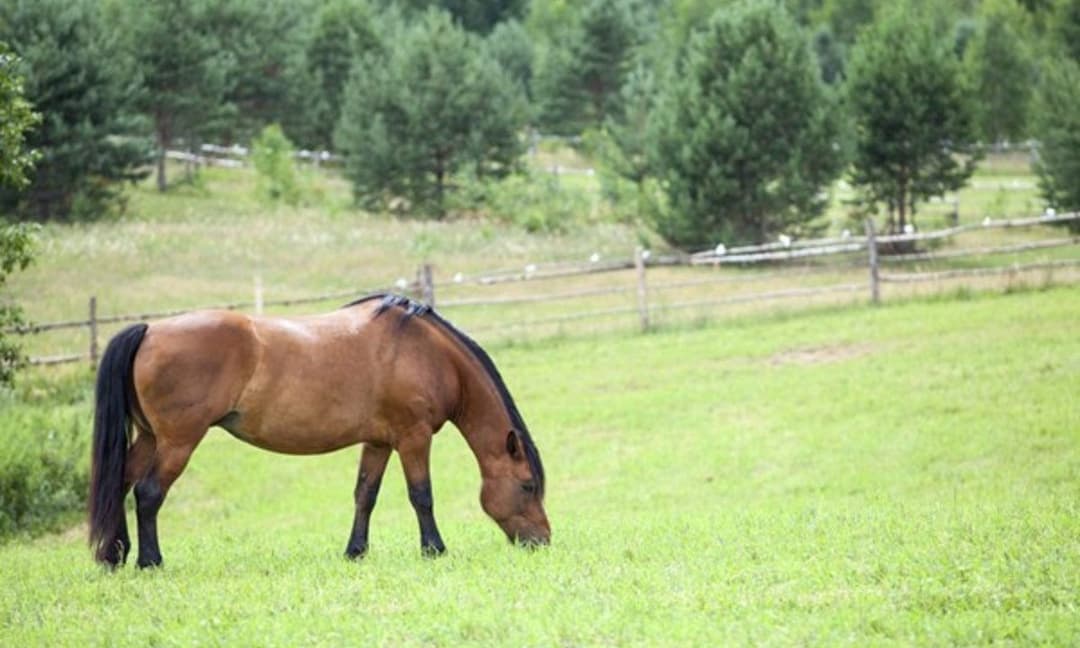
6. Horse Fencing Needs Extra Attention to Visibility and Stability
Horse fencing deserves a slightly different approach.
Horses move quickly, and a fence that is highly visible and physically stable is usually easier for them to recognize.
If you use polytape, polyrope, coated wire, or flexible horse fencing, post spacing needs to keep the fence visually consistent. Large sags between posts are not desirable.
Wind exposure also matters.
A wide polytape fence installed in a sheltered paddock may behave very differently from the same fence installed across an open field where strong crosswinds are common.
With horse fencing, choosing fewer posts purely to reduce cost is rarely a good design goal. Stable support and clear visibility matter more.
7. Livestock Type Can Change the Spacing Decision
Different animals interact with fences differently.
Cattle are often relatively straightforward once they understand the electric fence. A well-built fence can sometimes use wider post spacing on straight runs.
Sheep and goats can be more demanding, especially when lower wires are involved. You need to maintain the height of those conductors carefully because a large gap near the ground can become an obvious escape point.
For pigs, the lower part of the fence is particularly important.
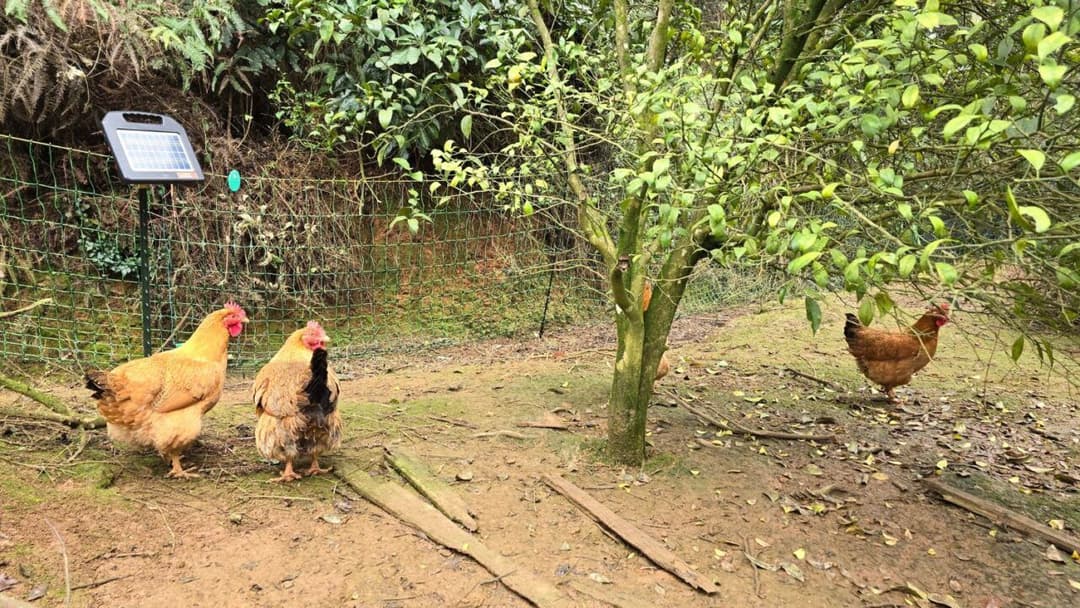
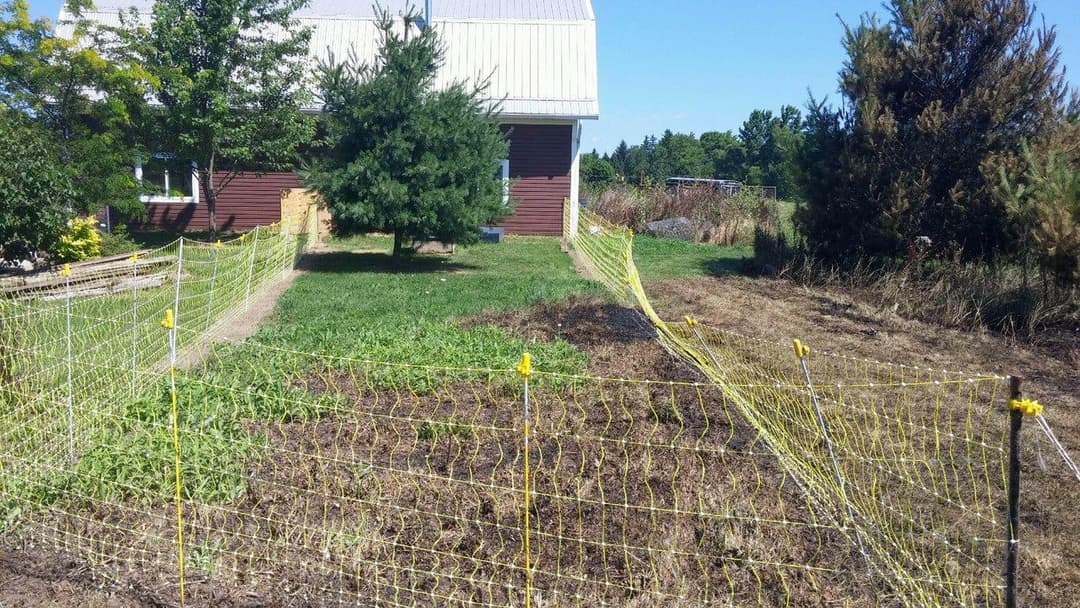
Poultry fencing is usually a different system entirely. Electric poultry netting uses integrated posts at predetermined intervals, so you normally follow the spacing built into the net rather than designing individual line-post spacing yourself.
Think about where the animal will test the fence, not just how the fence looks from your height.
8. More Fence Strands Can Mean More Load on the Posts
One strand of polywire is light.
Four or five strands are a different structure.
Every additional conductor adds weight and tension. Insulators also place load on the posts, especially at changes in direction.
This does not automatically mean you must halve the spacing whenever you add another wire. It means you should consider the complete fence rather than deciding post spacing from one strand.
This is particularly important when building a permanent multi-wire electric fence.
If a post starts bending before the fence is even finished, spacing is probably not the only problem. Check post strength, installation depth, conductor tension, and corner construction as well.
9. Wind Matters More Than Many People Expect
Wind is easy to ignore when you install a fence on a calm morning.
Then the weather changes.
Polytape can behave almost like a narrow sail. Electric netting also presents more surface area than a single wire. Even lightweight conductors can move considerably across long unsupported spans.
Repeated movement can wear conductors and insulators over time.
If your farm is exposed to frequent strong winds, shorter spacing or additional support may make sense, particularly for wide tape.
Look at the conditions the fence will face all year, not just on installation day.
10. Permanent and Temporary Posts Have Different Jobs
Plastic step-in posts and many fiberglass posts are excellent for portable electric fencing because they are lightweight and quick to install.
Permanent perimeter fencing asks more from a post.
A permanent system has to deal with years of tension, weather, vegetation, livestock pressure, and seasonal ground movement. Stronger corner and end posts become especially important.
You can also combine post types.
For example, a farmer may build a strong permanent perimeter fence and then use lightweight fiberglass or plastic posts to create temporary internal paddocks.
That often makes more sense than trying to make one post system do every job on the farm.
11. Don't Forget Gates and Changes in Direction
A perfectly calculated post spacing can still leave you short of posts.
Why?
Because real fences have gates.
They turn around buildings, cross tracks, follow field boundaries, and change elevation. These locations often need additional support regardless of your normal line-post spacing.
When estimating the number of posts for a project, calculate the straight sections first, then add posts for corners, gates, major terrain changes, and other high-load points.
This gives you a much more realistic material estimate.
12. Test a Short Section Before Building the Whole Fence
If you are unsure about spacing, build a short section first.
Install several posts using the spacing you are considering. Add the actual conductor, tension it normally, and look at the fence from different angles.
Does the conductor sag?
Does the tape move excessively?
Does it follow the terrain?
Are the lower wires still at the height you planned?
Push gently against the line posts and see how stable the system feels.
A ten-minute test can tell you more about your particular field than a generic spacing chart.
Conclusion
Electric fence post spacing depends on more than fence length. Conductor type, terrain, wind, livestock, number of strands, and whether the fence is temporary or permanent all affect how much support the line needs. Use wider spacing only when the conductor stays properly supported, and add posts wherever terrain, corners, gates, or wind create extra demands. Lydite Fence supplies plastic step-in posts, fiberglass posts, pigtail posts, metal posts, conductors, insulators, and other components for temporary and permanent electric fencing systems.
FAQ
How far apart should electric fence posts be?
There is no single spacing for every electric fence. Lightweight temporary fences on flat ground can often use wider spacing, while polytape, uneven terrain, multiple conductors, or exposed locations may require posts closer together.
Can electric fence posts be 10 meters apart?
In some well-designed electric fences, relatively wide spacing can work, particularly with lightweight conductors or properly tensioned permanent wire. Terrain, conductor sag, wind, animal type, and post strength should determine whether that spacing is suitable.
How far apart should horse fence posts be?
Horse fence spacing depends heavily on the fence material. Polytape, polyrope, coated wire, and flexible rail systems have different support requirements. The finished fence should remain visible, stable, and reasonably consistent in height without excessive sagging.
Do I need more electric fence posts on uneven ground?
Usually, yes. Add posts around dips, rises, and other significant changes in terrain so the conductors follow the ground instead of leaving excessive gaps.
Are fiberglass posts better than plastic posts?
Neither is automatically better for every fence. Plastic step-in posts are convenient for fast temporary installations, while fiberglass posts can provide a strong, lightweight option for many temporary and semi-permanent electric fencing applications. Choose according to the fence design and required durability.






Wuxi, China
Zhihui568, Jianghai Western Road
Wuxi, Jiangsu, China
Head Factory
Area A, Shuangmiao Industrial Park, Wutong Road, Huishan District, Wuxi City, Jiangsu Province, China


